Flight to Ghana: Expelled From the US to a Country They’d Never Been to
WARNING: This report contains scenes that some viewers might find disturbing.
This is Rabbiatu Kuyateh, being dragged through the lobby of a hotel in Accra, Ghana, on November 11, 2025.
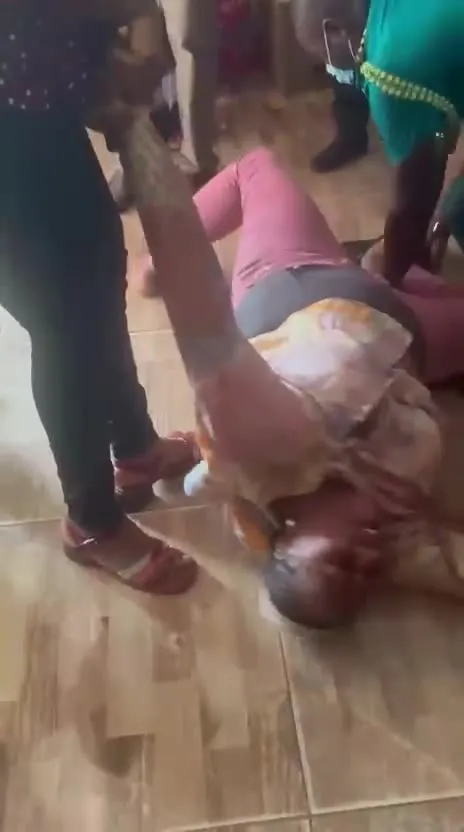 Watch the video (14 s)
For the past 30 years, Kuyateh – a native of Sierra Leone – had been living an ocean away, in the US – working for over 20 years as a nurse in the Baltimore area, raising her US-born son Mohamed, and taking care of her parents.
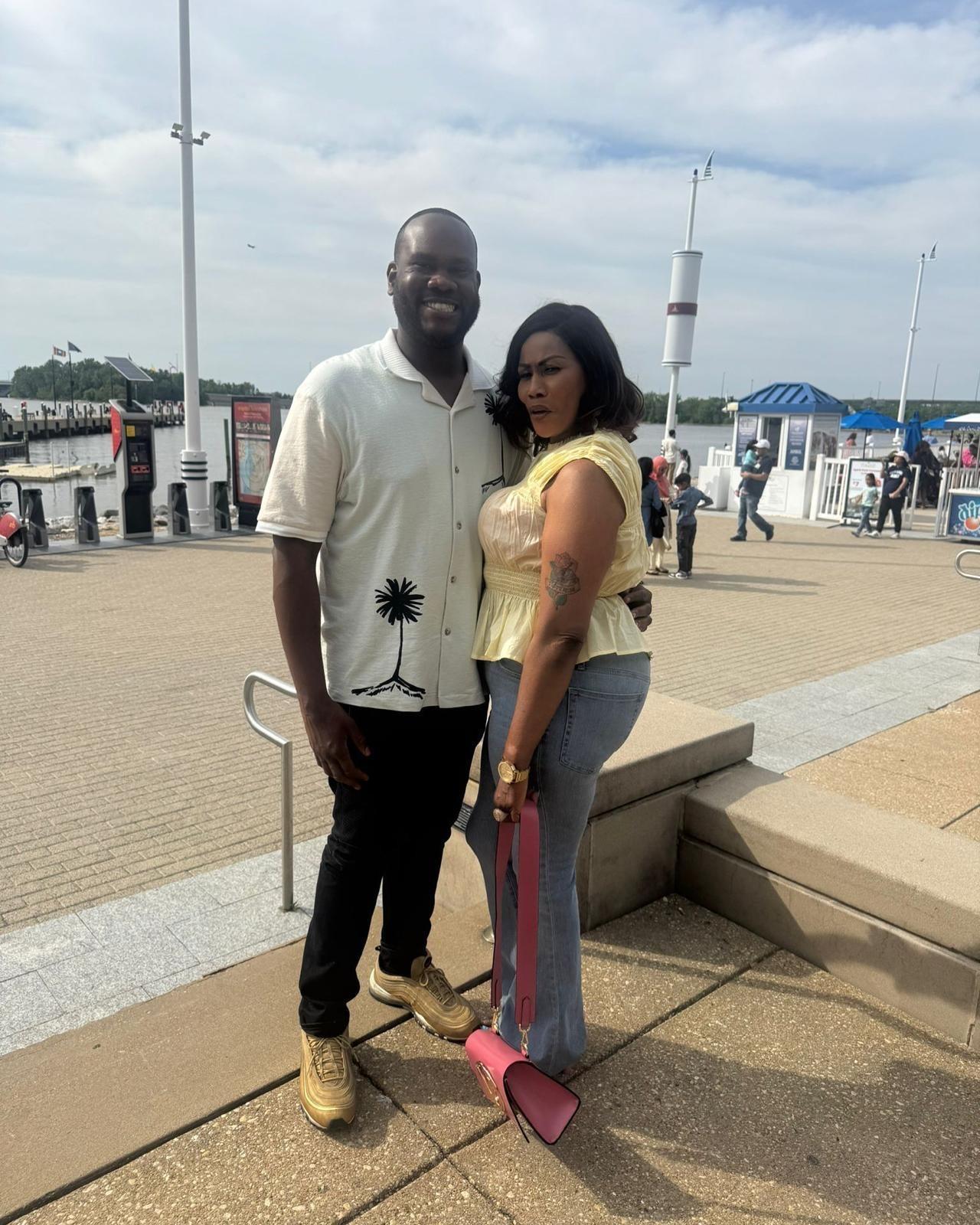 View the photograph
She had never been granted asylum or a permanent resident card, but had been allowed to stay on renewable work permits, reporting to Immigration and Customs Enforcement agency (ICE) every year as a condition of remaining in the country.
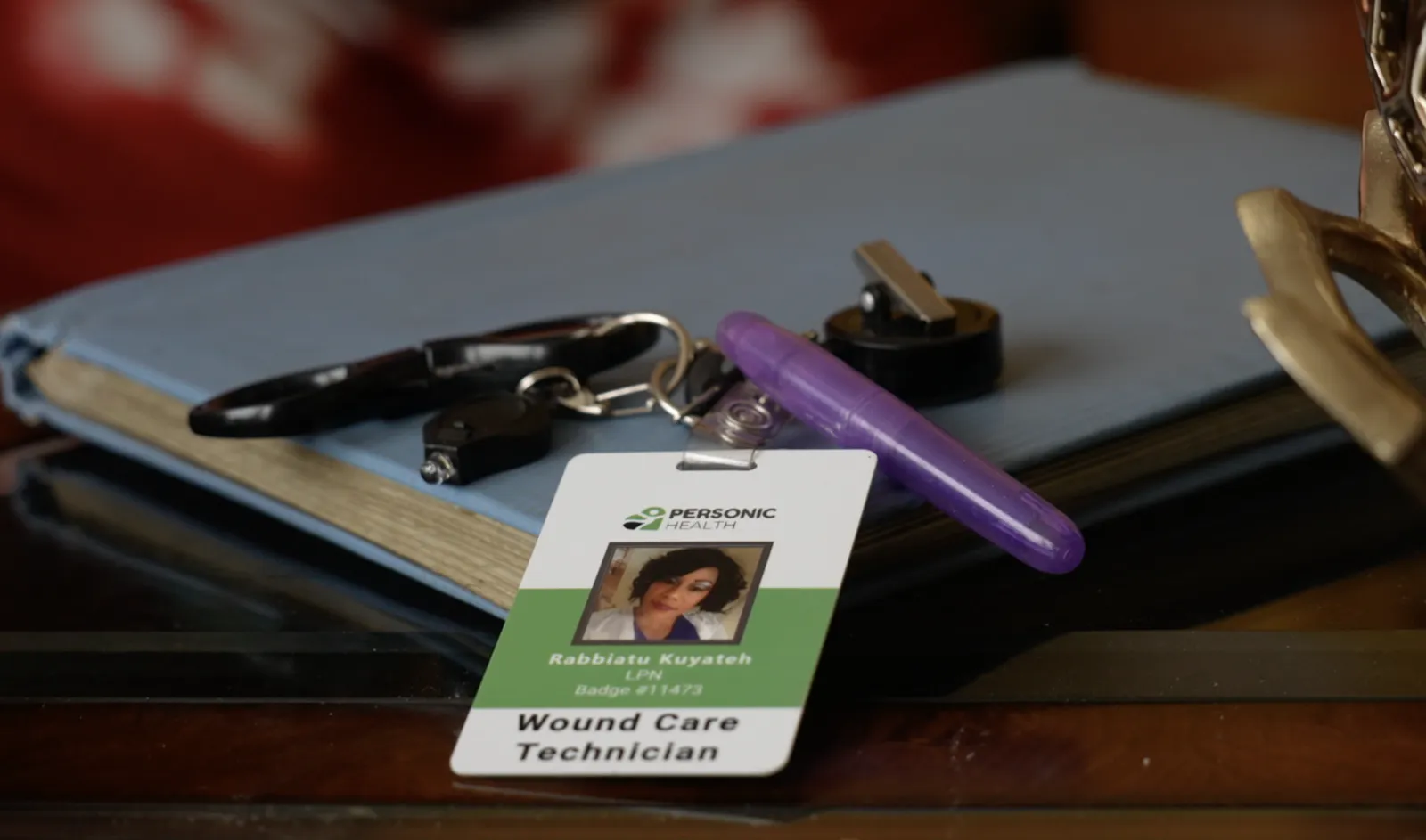 View the photograph
But during her annual check-in in July 2025, she was detained by ICE officers. Two days later, just before dawn, she was handcuffed and sent to Louisiana.
During her detention, she sought legal protection from being deported to her native Sierra Leone, where she says her father was a member of the political opposition. Reason enough to fear persecution if she returned.
In September last year, a judge granted humanitarian protection preventing her from being removed to Sierra Leone.
A few weeks later, an ICE officer came to see her in her cell and told her she would be released soon, she said. She immediately called her son to announce the great news. She was then put in a van and transferred to Alexandria International Airport in Louisiana.
Rabbiatu Kuyateh
I just noticed the car was parked adjacent to the plane. As soon as they came and opened the door like they’re letting me out, that is when they put handcuffs and shackles on.
I said, “What is this for?” That’s when they broke the news to me that they’re taking me to Ghana. I said, “What?” I was so helpless; the airport was dark. “Why would you take me to Ghana when they told me I’m going home?”
 Watch the video
The plane N225AX
That day, Kuyateh didn’t go home as she thought she would. Instead, she was put on a plane to Ghana – along with 18 others, including individuals from Senegal, Guinea, Gambia and Nigeria.
Many of them, like her, had been granted what’s known as Withholding of Removal – a legal protection meant to guarantee they wouldn’t be sent back to countries where they’ve shown they would likely face persecution or torture.
But since US President Donald Trump returned to power in January 2025, the protections to which this status entitles them – as described by most of the people we spoke to – have proven hollow. Forbidden Stories and its partners spoke to Kuyateh and four other people who were put on the same plane as Kuyateh – to a country they have no ties to.
According to data collected by Human Rights First, theirs was one of at least nine flights since September 2025 to have deported over 100 non-Ghanaians to Ghana under the Trump administration’s “third country deportation” policy, marking the highest total for any African country. Many of the deportees had no criminal record.
On the runway at Alexandria International Airport in Louisiana, in the middle of the night, Kuyateh was shackled at the feet and hands.
Malick*, a Senegalese man in his twenties who fled his country for the United States in 2023 due to safety concerns and who asked to be identified using a pseudonym, found himself on the same runway. Just like Kuyateh, he says he had been building a new life – working, paying taxes, and never having any trouble with the law – only to be detained at a routine check-in. That day, he recalled, “the agents told us we would be deported to Ghana... I didn’t want to go. An officer told me, ‘If you refuse, we’ll force you.’”
[*Names that have been changed in this article are indicated with an asterisk]
One of those set to be removed that night, Ousmane*, attempted to escape his fate: “I started resisting, saying I wasn’t going to go anywhere,” said the man, a West African who had been living in the US for more than 20 years. “I started getting beat up, having my face covered up, in front of all the other detainees, just to scare them.” He was reportedly placed in a full-body restraint device – commonly referred to as the WRAP device – that ICE has increasingly used during deportations.
Plane N225AX left Alexandria on November 6, 2025 at around 1:30am local time.
Kuyateh remembers the hours, that followed only in fragments. She was kept in handcuffs throughout – even while eating.
Rabbiatu Kuyateh
I was there for like hours, I couldn’t talk, I was numb. They wanted me to bend down like a dog. I was not able to even grab...
 Watch the video (7 s)
Nine hours later, the plane made a first stop, in Dakar, Senegal.
As the plane sat on the tarmac there, Mariama*, a 29-year-old deportee originally from Senegal, begged to be let off.
Mariama
I was crying.
I told them, "Let me get off, I want to leave."
They said, "No, we won't leave you here. We're taking you to Ghana."
After a two-and-a-half-hour stop in Dakar, the plane took off again and later landed in Accra.
Malick remembers feeling something close to relief when they were taken to a hotel in the capital.
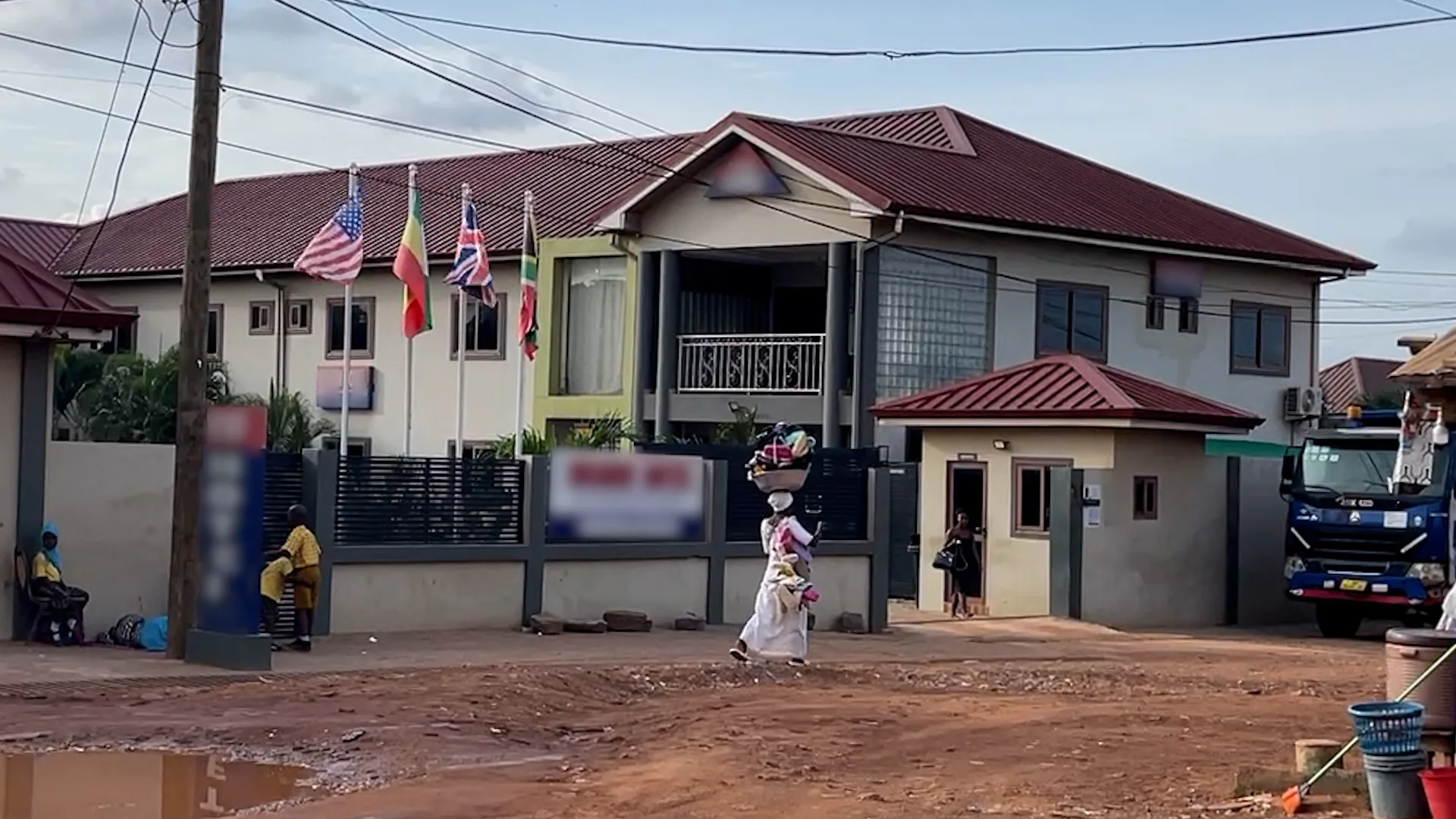 View the photograph
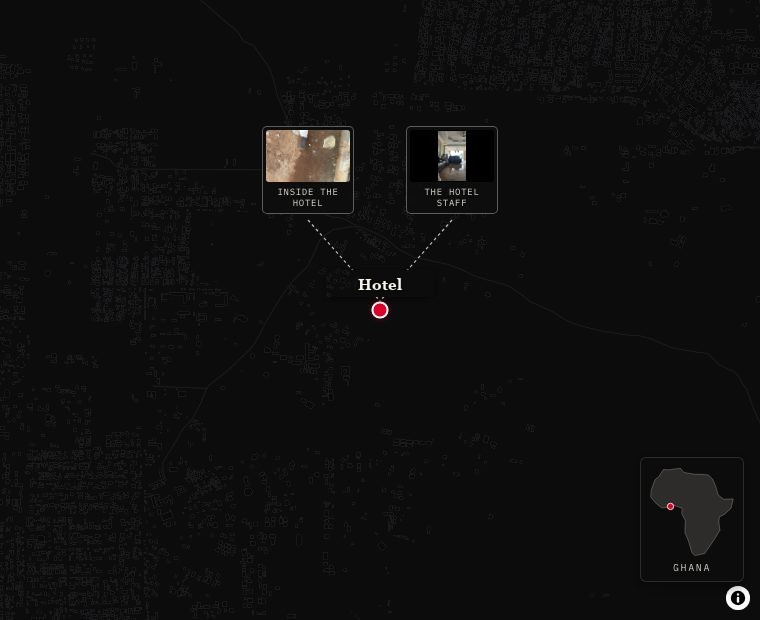 View the map
Malick
The Ghanaians came to welcome us, took us to a hotel.
Since we’d been tortured while in detention, we felt at ease at the hotel in Ghana.
We thought the Ghanaians would welcome us and keep us safe.
The hotel
The calm didn’t last. The Nigerians on board were sent to Nigeria the next day, according to Malick. Five days later, Ghanaian immigration officers came back to the hotel – this time for Rabbiatu Kuyateh.
Rabbiatu Kuyateh
I saw some officers – they said they’re going to take me to Sierra Leone. I said, “I’m not going to Sierra Leone”. I said, “I’m afraid to go there”. That’s when I turned to them; I said, “Can we wait? Somebody from my embassy is coming.” That’s when they became so agitated, so upset. “You’re not going to wait, you’re leaving now.” Some of them were pulling my limbs, this side and this side. They dragged me down, they pulled me down to the lobby. Luckily, one of the lawyers came – his name is Mr Oliver. I was holding onto him – help me, I don’t want to go to Sierra Leone, I’m not safe there. They grabbed me. The videos will tell.
 Watch the video
Her fear of Sierra Leone, she said, wasn’t new. The danger hadn’t faded since the first time she came back in the mid-1990s, after an order of removal. At that time, her family home was burnt. More recently, her brother was detained and tortured during a 2014 visit. Both incidents were the result of their father’s political activities, she told Forbidden Stories (We were not able to independently verify her account.) Accordingly, she could not be returned to her country of origin, pursuant to the principle of non-refoulement enshrined in the 1951 Refugee Convention.
That November day, the scene was captured by Malick, who provided the clips to Forbidden Stories. “I took these videos to prove the Ghanaians didn’t keep their word,” he said.
 Watch the video (7 s)
 Watch the video (16 s)
 Watch the video (25 s)
Also attending the scene was lawyer Oliver Barker-Vormawor. He had been fighting to learn more about the undisclosed US-Ghana deal ever since the first flight with so-called third country nationals landed in September 2025, accusing Ghana of helping the US deport migrants to places where they risk serious harm. “At the time, we did not even have a copy of the agreement,” the lawyer recalled.
The terms of the deal for Ghana to receive these people had never been made public – there existed only a timeline of clues.
The US imposed a 15% tariff on Ghanaian imports.
The two countries exchanged diplomatic notes on hosting deportees, according to documents seen by the Washington Post, in an arrangement that bypassed parliamentary ratification.
Foreign Minister Samuel Okudzeto Ablakwa called Ghana’s decision “purely on humanitarian principle,” not a quid pro quo – but later admitted American officials had floated “concessions on visas and tariffs.”
Washington restored five-year visas for Ghanaians.
Washington lifted the tariff on Ghanaian cocoa exports.
It took a Supreme Court order for Oliver Barker-Vormawor to even lay eyes on the document at the heart of the arrangement and even then, only to see it – not to keep a copy. "We’re able to take notes of it," he said. The one-page note, he recalled, had Ghana "agreeing to accept them and to respect international refugee obligations."
This month, the US government published the note itself. Dated August 1, 2025, it commits Ghana to treating anyone transferred from the US "in a manner that is consistent with its obligations under the Convention Relating to the Status of Refugees" and assures that no one removed to Ghana "would be subjected to persecution on account of race, religion, nationality, membership in a particular social group, or political opinion, or torture in Ghana or in any country to which the Government of Ghana may further transfer them." It applies only to nationals of West African countries – in practice, every member of the regional bloc, the Economic Community of West African States (ECOWAS) except Ghana itself – and gives Accra "complete discretion to accept or reject the transfer of any given individual."
According to information obtained by the Washington Post as part of this project, US officials certified these assurances as credible on September 4, 2025. Ghana agreed to accept up to 250 nationals, and screened out anyone with a "serious" criminal record, though non-violent offenders were deemed acceptable.
Ghana accepted the transfer of Kuyateh, an ECOWAS national with no criminal record and then put her on a plane to Sierra Leone anyway – the exact kind of further transfer the notes had promised would never happen.
Held in a military compound
View the mapWhile Kuyateh was being flown back to Sierra Leone, the rest of the deportees at the hotel confronted a different fate. That evening, soldiers arrived in two lorries. “I’d say they kidnapped us,” Malick said.
The group – everyone except Kuyateh – was taken to the Bundase military camp, 50 kilometres away.
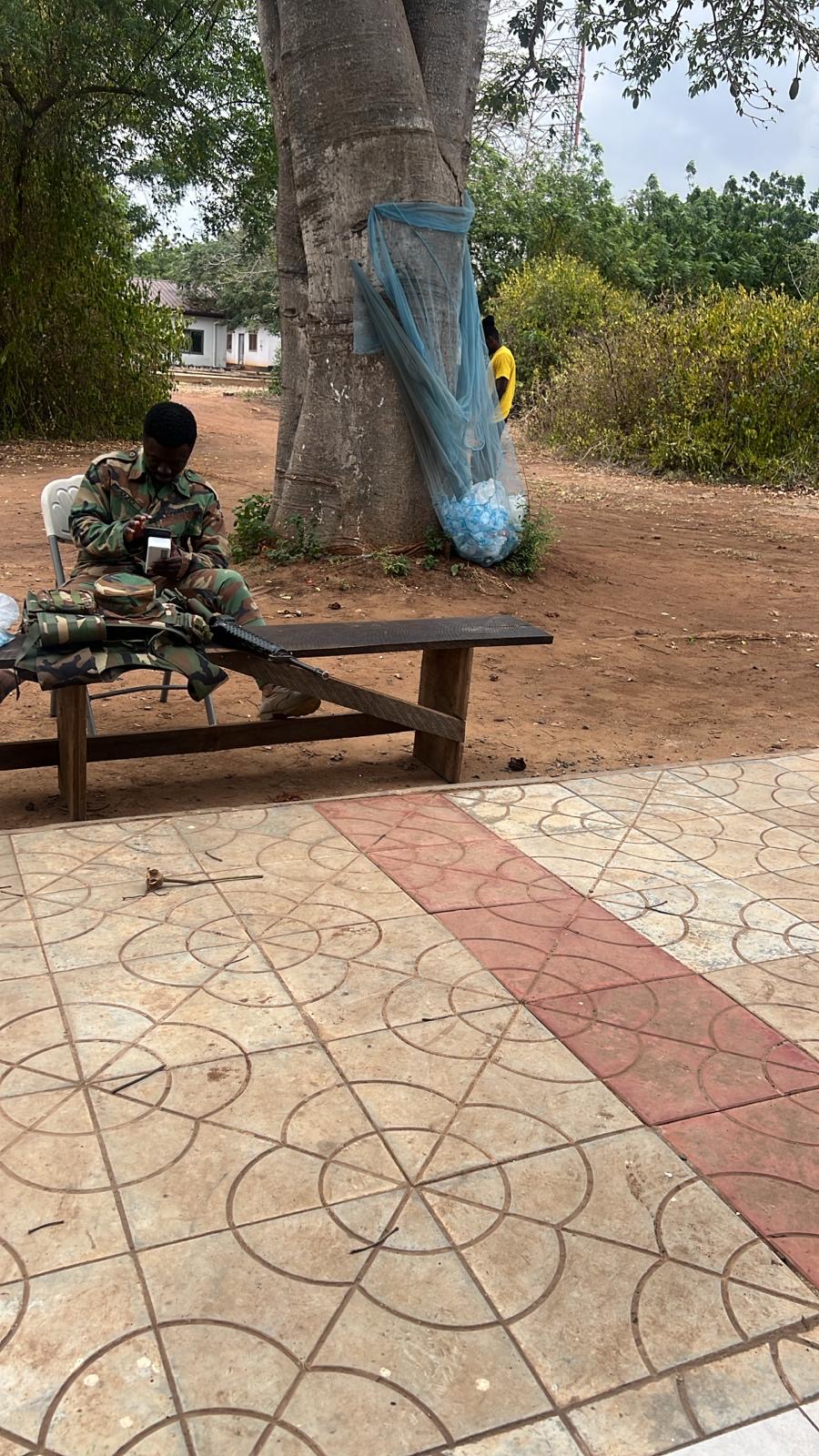 View the photograph
“It’s against Ghanaian law to hold civilians in military facilities,” lawyer Barker-Vormawor said. “Many kilometres from Accra, from the airport – our thinking is it was part of the desire to keep secrecy around it.”
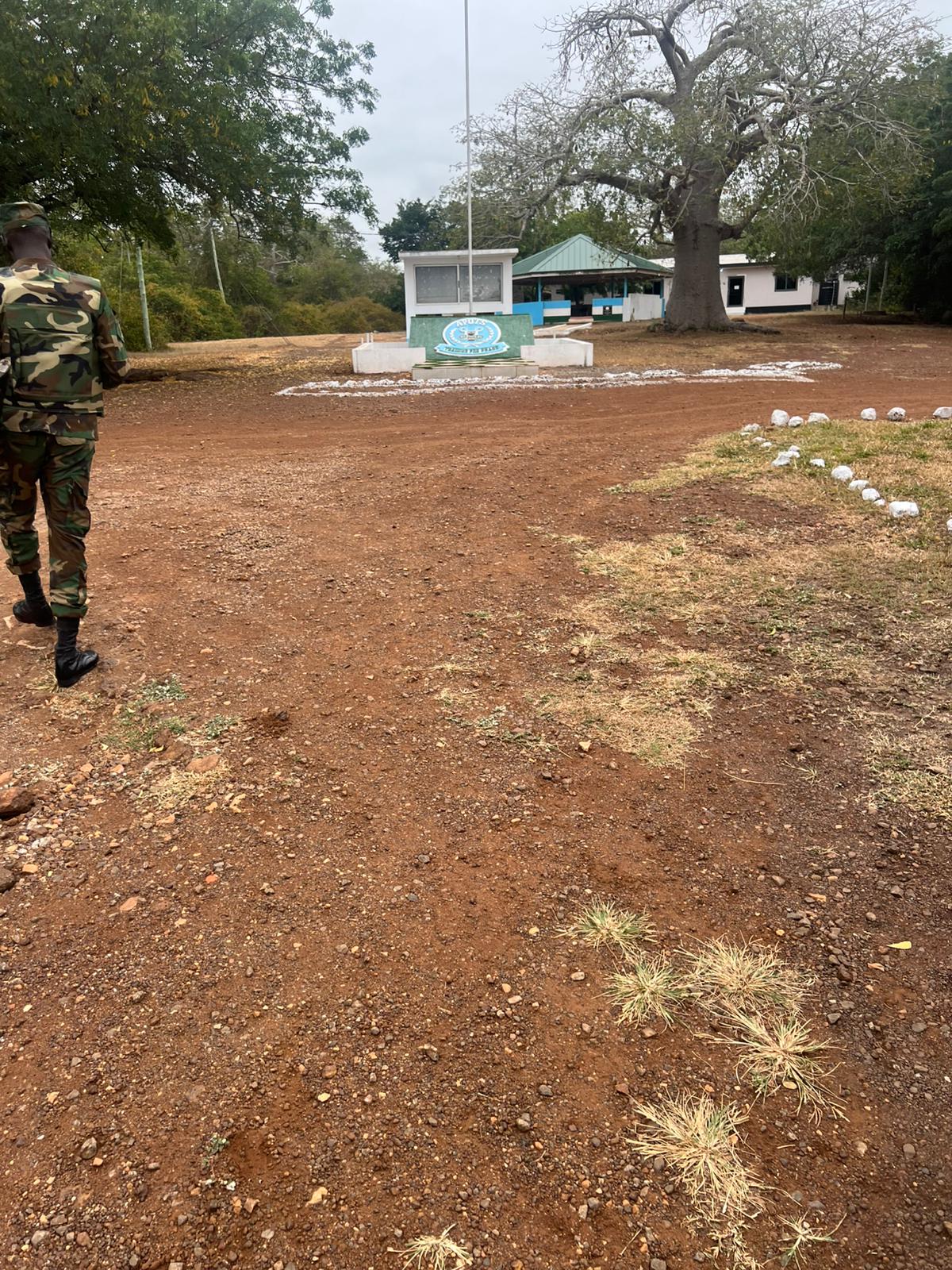 View the photograph
It wasn’t the first time that deportees from the US were sent to that camp. In September 2025, 11 deportees from a previous flight had gone through the same ordeal, held incommunicado for two weeks.
Some of them – including Ali*, seen in the video – were then dumped, undocumented, at the Togo border in the middle of the night.
 Watch the video (27 s)
Isatou*, a 22-year-old who had fled Guinea to escape a forced marriage and who was also on the November flight, remembers the conditions they faced at the Bundase Camp.
Isatou
The immigration people left us in the hands of soldiers who were undergoing training there.
They blocked all our phones. They treated us like criminals.
We just lay there in the heat and the filth until they came to pick us up to deport us.
These circumstances also plunged Mariama – the Senegalese woman who had begged authorities to let her off the plane in Senegal – into despair.
Mariama
It’s [was] so dirty – the girls and guys [were] all in the same room.
We don’t have any food, we don’t have any sheets to cover ourselves – we have nothing there.
They kidnapped us and locked the door.
I didn’t have any clothes to wear. I just had a T-shirt and a pair of pants.
When I went into my bathroom to wash them, I saw bleach.
Then I drank the bleach because I wanted to die. Because they wanted to force me to go back to my country.
Contains a description of self-harm.
The airport: signing under duress
“We found her lying on the ground, her eyes open, foam at her mouth,” Malick recalled. “It was like a nightmare – the first time I’d seen someone in that state.”
Mariama spent three days in the hospital, where she said the Senegalese ambassador pressured her to sign a document agreeing to return home. “I agreed, I signed, and they took me straight to the airport,” she said, “with a stopover in Côte d’Ivoire, then Senegal.”
The rest were moved to a detention facility at the airport.
“The bathrooms were dirty, with no water, we couldn’t shower,” Malick said. “They were putting pressure on us every day to call our ambassadors. It was at the airport that I decided to sign, so they’d issue me a travel document. I had no choice – the conditions were appalling.”
 Watch the video (8 s)
 Watch the video (7 s)
 Watch the video (7 s)
Living in limbo
For their safety, we won’t say where the people on the November 6, 2025 flight are now. But this is what they told us: nearly a year later, they are all in limbo.
Kuyateh still turns it over in her mind, unable to reconcile what happened to her with the life she built in the US.
Rabbiatu Kuyateh
I’ve worked as a nurse for over 20 years… During COVID, in the unit that I was running, people were dying in my hands when their loved ones were not there. I gave them the last care they should get. I was never a criminal. I paid my due taxes. I abided by the law. All I was begging for in America was for me to get a stay. I used to think about Ghana – it just throws me off, because I don’t know what I did to them. I went there peacefully; I abided by what they said. I was there trying to process what they did to me in the United States, only for a mob of people to attack me. What did I do to them, dragging me all over the place?
 Watch the video
Isatou was ultimately deported to Guinea – the very country she’d fled to escape a forced marriage.
“I’m truly disappointed by American immigration and by Ghanaian immigration too,” she said. “They ruined my life.”
For Barker-Vormawor, what happened to them fits a pattern he has a name for. “This is what some people call chain refoulement,” he said. “Because international law prevents the US from sending them back to their countries of origin, they send them via a third state – which is Ghana – and it sends them back.”
The investigation Ghana’s government promised after the videos of Kuyateh being dragged by immigration officers went public in November 2025, he added, never materialised. “They claimed they were going to set up a committee to investigate [what happened to Kuyateh]. That never happened. The public exposure is what they did not anticipate.”
In June 2026, his firm joined a coalition – including Cornell Law School’s Transnational Disputes Clinic and the Global Strategic Litigation Council – in suing Ghana before the ECOWAS Community Court of Justice in Abuja, Nigeria, on behalf of 27 of the more than 100 people deported there. Medical evaluations cited in the suit found signs of post-traumatic stress and severe depression in several of them. The coalition accuses Ghana of violating the international principle of non-refoulement and is asking the court to halt further transfers, force Ghana to disclose the deal’s terms, award damages, and bar Accra from signing similar agreements again.
In the US, a federal appeals court ruled on September 18 that the way the Trump administration’s third-country deportation policy was being carried out was unlawful, finding that those affected hadn’t been given enough advance notice to contest their removal. Legal experts expect the administration to appeal to the Supreme Court, which could let deportations resume in the meantime – for now, though, they’re supposed to remain on hold.
We reached out to the Ghanaian authorities and the US Department of Homeland Security, which oversees ICE, but they did not respond to our questions within the deadline set by our consortium. Contacted, the US Department of State said in a statement that “the US government will use all legal means to remove those with no right to remain in our country.”
Ghana is one of at least 13 African countries to have struck such deals with the US – part of a wider push that has sent thousands of people to more than two dozen countries that aren’t their own.
“I am convinced the United States is using Ghana for its dirty work,” Barker-Vormawor said. “In fact, I might go on to say – human laundering, for lack of a better word.”
Additional reporting: Karina Chabour (FRANCE 24), Kwaku Asante, Seth Bokpe (The Fourth Estate), Sofía Alvarez Jurado and Magdalena Hervada (Forbidden Stories)